
Countdown to LiGHT 25: Discover the show's new features
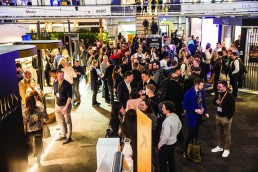
(UK) - The countdown is nearly over, with just one week to go before visitors and exhibitors gather for the 2025 edition — an expanded showcase of innovation, education, and networking opportunities. This year’s highlights include the launch of the brand-new Technical Zone, the much-anticipated return of the Associations Lounge, and an exciting new immersive light art installation.
Launched for the first time at LiGHT 25, the Technical Zone will provide a dedicated showcase for brands at the forefront of urban lighting, commercial lighting, control systems, components and OEM, lamps and gear, and emergency lighting. With advanced controls, emergency systems, and components playing an increasingly important role in sustainable and human-centric design, the Technical Zone offers both exhibitors and visitors a vital platform to exchange expertise and explore the latest developments.
Supported by Studio Due, the Associations Lounge will once again act as a shared hub for leading industry bodies, including the DALI Alliance, The LIA, ILP, SLL and the IALD. Located on the Gallery Level, the lounge will provide visitors and exhibitors with a comfortable environment away from the show floor, complete with complimentary refreshments, networking events such as the in-person Silhouette Awards celebration, the LiGHT Lunch with Studio Due and speaker David Atkinson, DALD, and a dedicated talks programme. It also offers the opportunity to learn more about association initiatives and membership.
Central to the educational element of the show programme is the CPD-accredited [d]arc thoughts talks series in collaboration with Lutron. Curated and moderated by editors of arc and darc magazines alongside guest moderators, the two-day talks programme will bring together global experts to address themes ranging from sustainability and circularity to wellness, health, and the business of design. Topics and highlights include Out of Our Lane: What Lighting Designers Must Learn from Medicine, with speaker Willie Duggan (Lighting Designer), which calls on lighting professionals to step beyond the silo of the industry. Plus, True Luxury is Handmade: Crafted for Connoisseurs of Light, with speaker Surbhi Jindal (Da Light Hub / Women in Lighting India Ambassador), exploring the creativity that brings bespoke lighting designs to life.
LiGHT 25 will also feature a new light art installation with Speirs Major Light Architecture, who have partnered with formalighting to present Re:Vision. Exploring the theme of colour perception across species, Re:Vision uses custom spectral profiles and reimagined Ishihara colour blindness test patterns to reveal the diversity of visual experience across the natural world. LiGHT isn’t just a trade show made up of rows of exhibitors. It’s a chance for designers, engineers, and architects to really immerse themselves in light, learn more about how light shapes the design industry, and make new connections through our varied features.
In addition to these new features, LiGHT 25 will bring together thousands of architects, interior designers, lighting designers, engineers, and specifiers, alongside hundreds of leading architectural and decorative lighting brands. Visitors can also take advantage of networking opportunities throughout the event, including a late-night drinks party, a networking lunch, and a dedicated co-working space.
LiGHT 25 is a must-visit event for anyone involved in lighting, architecture, interior design, engineering, and beyond. The show has a perfect mix to discover new ideas, strengthen professional relationships, and stay at the forefront of the lighting industry.
Visitor registration is free. To register and for more information, visit: https://www.lightexpo.london/


formalighting awarded the EcoVadis platinum medal
(Global) – Italian lighting manufacturer, formalighting, announces that it has been awarded the EcoVadis Platinum Medal, achieving a score of 95/100 in its latest assessment. This result places formalighting within the top 1% of companies worldwide assessed by the sustainability assessment platform over the past twelve months.
The Platinum Medal reflects the brand’s unwavering commitment to sustainable business practices and responsible growth. The company achieved a perfect 100/100 in Environment, 94/100 in Labour & Human Rights, and 99/100 in Sustainable Procurement, demonstrating its strong environmental management systems, people-centred policies, and responsible supply chain practices.
The result follows continuous improvements in sustainability governance, with strengthened policies, ambitious measurable objectives, and ISO 14001 certification across its operations. The award also reinforces the company’s ongoing collaboration within international supply chains, demonstrating that formalighting meets and exceeds the highest environmental and social responsibility standards expected in the industry.
EcoVadis is the world’s most trusted provider of business sustainability ratings, assessing companies on international sustainability standards, including the Global Reporting Initiative (GRI), the United Nations Global Compact, and ISO 26000. The platinum medal is the highest recognition, reserved for companies demonstrating outstanding sustainability performance and transparent reporting.
Michael Monsonego, CEO of formalighting shares, “We are truly honoured to receive the EcoVadis Platinum Medal. This recognition reaffirms our ongoing dedication to embedding sustainability into every aspect of our business - from energy efficiency and responsible sourcing to employee wellbeing and community engagement. It is a testament to the collective efforts of our global teams and their commitment to a more sustainable future.”
“Achieving the Platinum rating is both a recognition and a responsibility. We remain determined and committed to building upon this success, continuing to innovate and lead with purpose as we work towards a brighter and more sustainable future for our wonderful lighting industry,” concludes Sharon Maghnagi, Global Operations Director at formalighting.
L&L Luce&Light opens it first Asian showroom
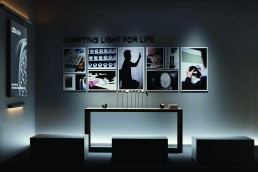
(Vietnam) – On 4 August, Italian lighting manufacturer L&L Luce&Light opened its first exhibition hub in Asia. The new space is located within LightHub – LK Technology Smart Lighting and Smart City Experience Center in Ho Chi Minh City, Vietnam.
Vietnam has become an important market for the company, given its strategic location and rapid growth. In recent years, L&L Luce&Light has taken part in several projects in hospitality, retail and contemporary architecture, including Lim Tower 3 and Park Hyatt Saigon in Ho Chi Minh City, the Salvatore Ferragamo flagship store in Tokyo, and the Rosewood Hotel in Bangkok.
“We were eager to open this showroom because it marks a key step in consolidating our presence in this area,” says Marco Celsan, CEO of L&L Luce&Light. “This milestone was made possible through our collaboration with LK Technology, a partner with whom we share a vision of innovation, quality and the integration of light, architecture and smart technologies.”
The new hub has been designed as a permanent space for exchange, learning and dialogue. Aimed for local lighting designers, architects and professionals, it offers the opportunity to explore a range of LED lighting solutions up close and to directly put their performance and potential to the test. This meeting point will foster collaborative design and provide tailored support, with direct assistance from the L&L Luce&Light team.
The Vietnam hub represents a further step in L&L Luce&Light’s global strategy to promote high-quality, design-led lighting systems for projects around the world.
Speirs Major explores how other species see the world
(UK) – After last year’s mesmerising Intra-Spectrum by light artist Frankie Boyle, LiGHT is once again set to captivate audiences with another immersive installation. This time, by renowned lighting design studio Speirs Major Light Architecture, who, in collaboration with Italian manufacturer formalighting, will unveil an immersive new experience titled Re:Vision.
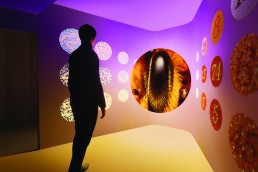
Re:Vision invites visitors to step into a world of light and perception - a sensory journey that challenges how we see and understand the visual experience of other species. Using custom spectral profiles and reimagined Ishihara colour blindness test patterns, the installation explores how different life forms perceive colour and light in ways entirely distinct from our own.
Speirs Major explains, “We’ve always been fascinated by how each species experiences a completely different version of reality, despite sharing the same planet. When you begin to understand this, you start to think about the impact we as lighting designers have on those experiences through artificial light. This installation is intended to open minds - to start a conversation about designing not just for humans, but for the many other living beings that share our spaces.”
To translate complex scientific research into an accessible experience, Speirs Major and formalighting have crafted a series of environments, each based on the spectral vision of different animals. Within these spaces, visitors encounter Ishihara-style colour charts - familiar to many as tests for colour blindness - which appear or vanish depending on the available spectrum. The result is both playful and profound: an artistic incitement that makes us question how others, human or otherwise, perceive the world.
Speirs Major goes on to explain, “It’s not about simulating another species’ vision, but about creating a spark - an opportunity to see differently, even for a moment.”
Through their partnership with formalighting, known for their innovation and precision in light control, Speirs Major were able to bring this vision to life using advanced luminaires and motorised systems that enable dynamic spectral shifts and subtle changes in atmosphere.
At its heart, Re: Vision is a call for empathy and imagination. Inspired by philosopher Thomas Nagel’s essay What Is It Like to Be a Bat?, the installation embraces the impossibility of truly seeing through another creature’s eyes - and yet, in doing so, invites us to reflect on how we design for a world of difference. “Humans are the only species that truly needs artificial light,” says Speirs Major. “Yet our use of light affects every other species. Birds stay awake longer under urban lighting, nocturnal creatures lose darkness, and ecosystems are disrupted. This project asks us to think beyond ourselves.”
The designers say Re:Vision also connects with broader discussions about accessibility in design, noting that perception can vary significantly between individuals. As Speirs Major explains, “Even within our own species, perception varies - ageing changes how we see, and those with colour blindness experience the world differently. Re:Vision is a reminder that design must account for those differences, cultivating awareness and empathy along the way.”
For visitors to LiGHT 25, Re:Vision is more than an installation - it’s an experience that stays with you. It will make you pause, question, and perhaps even see your own work differently. LiGHT 25 will showcase a range of innovations and artistic works within the lighting industry, continuing its focus on both the technical and creative aspects of illumination.
https://www.lightexpo.london/

Canada Light Expo returns for 2025
(Canada) - Canada Light Expo is set to return for its second edition from 12–13 November 2025 at the International Centre in Toronto. Organised by MEX International, the event will bring together brands, professionals, and innovators from across the lighting sector to explore the latest technologies and trends shaping the industry’s future.
The 2025 edition will feature more than 80 leading brands and 1,000+ innovative products, spanning architectural, landscape, smart, energy-efficient, human-centric, horticultural, and decorative lighting solutions. Visitors will witness how design, technology, and sustainability will transform the lighting landscape, reflecting Canada’s growing commitment to energy efficiency and sustainable infrastructure.
The Advisory Board of professionals from the lighting sector has been assembled to support the 2025 programme. Some of them include Alana Punit (Salex), Carl Huestis (Axis Lighting), Cindy Foster Warthen Director of Event Strategy (Canada Light Expo), Dan Hadash (Light Space), Dayna Bradley (Bradley Consulting), Deborah Gottesman (Gottesman Associates), Dawn Brown (OALD), Eric Teacher (STL Lighting Group), Joan Orgel (Electromart Hamilton), Martha MacEachen (Dubo Électrique), Michael Jennison (Omnilumen Technical Products), Paul Boken (Sourcery), Rozlyn Mead (Student Advisor), Shirley Coyle (Cree Lighting), and Tom Butters (The Lighting Agora).
Himani Gulati, MEX International Director of Sales- International Markets, comments: “With the second edition of Canada Light Expo, we continue our mission to advance Canada’s lighting sector through knowledge, networking, and innovation. The event reflects our commitment to creating a global-standard platform that empowers professionals to explore emerging technologies and redefine the way the world experiences light.”
The 2025 event will be supported by several sponsors and partners, including Axis and Cree as Silver Sponsors, Salex, Omnilumen, and TPL as Official Agency Partners, Sourcery as Mobile App Sponsor, and Rosco as Bronze Sponsor. Knowledge partners include The Lighting Agora and SARA National, with media support from publications such as arc Magazine, Designing Lighting, Light No , and Light Directory.
A key feature of the show will be Canada Light Talks 2025, a two-day conference comprising presentations, workshops, and panel discussions. Topics will include advancements in LED technology, human-centric design, smart lighting, sustainability, and exterior applications. The programme seeks to encourage collaboration and the exchange of insights among industry professionals.
The conference will also feature a keynote session, Integrating Lighting into Health and Wellness: Looking Beyond Circadian Mechanisms and Applications, presented by Douglas Steel. Other confirmed speakers include Dan Hadash, Dayna Bradley, Alan McIntosh, Marcel Dion, Michel Arcand, Peter Brown, and Tom Butters.
Complementing the exhibition and conference is a series of exclusive networking. The Lighting Workshop offers hands-on sessions led by experts, enabling participants to gain practical knowledge and technical insights. Enhancing the networking experience, the Lovers of Light- Canada, Cocktail Reception + Networking Game Show, moderated by Dave Young, brings together entertainment with professional interaction through two exciting rounds of themed discussions and challenges.
Adding to the lineup of interactive experiences, attendees can also participate in the Networking Luncheon sessions including Luncheon Panel on Better By Design: Why Lighting Interior and Lighting Design Collaboration Creates Better Spaces sponsored by Association of Registered Interior Designers of Ontario (ARIDO), Luncheon Panel on AI and Lighting Specification- Pros and Cons, and Breakfast Networking Interactive Workshop on Unplugged but Illuminated: Finding Balance in a Technological World by ATLA (All Things Lighting Association), and the Lighting Workshop, featuring expert-led, hands-on sessions designed to share practical knowledge and insights from the field.
A new feature for 2025, the Connections Section, will serve as an exclusive roundtable networking area, providing lighting industry professionals a dedicated space to engage and network with like-minded people. This premium feature fosters targeted discussions and meaningful collaborations. Participating associations include Lighting Agora, NLB, Nuckolls Fund, IALD Canada, IES Toronto Section, International Commission on Illumination (CNC-CIE), WILD, NEMRA Lighting, ARIDO, and WIL.
With the Canadian government’s strong push toward energy efficiency and sustainability, the country’s lighting sector is witnessing rapid transformation. The rising adoption of smart lighting technologies, supported by national initiatives and incentive programs, continues to drive innovation and demand across the industry. Canada Light Expo 2025 offers the ideal platform for architects, lighting designers, engineers, consultants, and contractors to connect, explore, and contribute to shaping the future of Canada’s smart and energy-efficient lighting landscape.
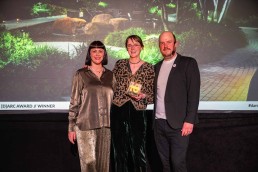
[d]arc awards Best of the Best winners so far…
(UK) – The [d]arc awards, the world’s only peer-voted celebration of creativity in lighting design, has officially reopened entries for its 2025 edition! As we gear up for another dazzling year, we’re taking a look back at some of the past “Best of the Best” winners – the ultimate accolade, awarded to the project that received the highest number of votes across all categories.
Each of these projects has pushed the boundaries of imagination, technology, and storytelling through light. Maybe this year, it could be your turn to take the spotlight…
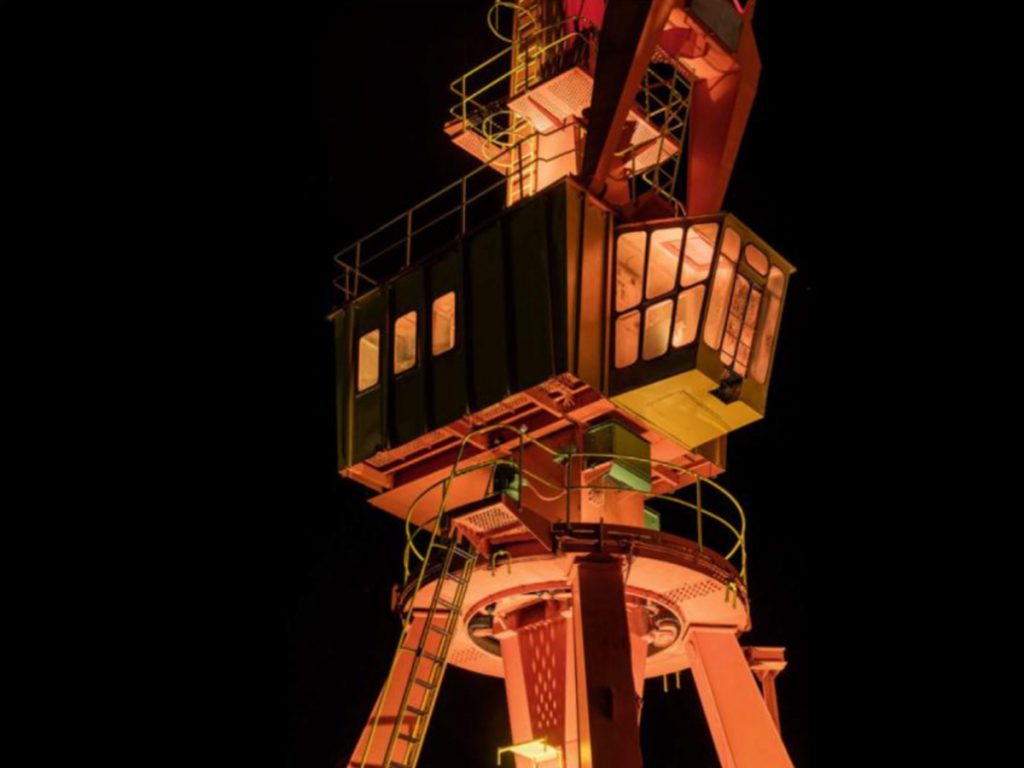
2017 – Pier Mauá Cranes by LD Studio
The Pier Mauá cranes are iconic cranes in Rio de Janeiro, Brazil, which are now a centrepiece of the city's waterfront regeneration project, called the "Porto Maravilha". They are a popular tourist attraction and cultural landmark, used for various events and lighting displays. The cranes have a history as working docks and have been preserved to add a historical element to the new urban space. Brazilian-based LD Studio provided the lighting concept to the metal structures in a way that allows people to go back to childhood and give wings to their imagination. The designer’s approach consists of revealing the main structure, the ‘animal’s legs and upper body’, using warm white LED flood lights with different intensity and beam angles, while taking the opportunity of the existing transparency of its operator’s cabins and along the crane’s ‘arms’, using LED RGB technology.
https://issuu.com/mondiale/docs/daawards17_digital_issuu/4
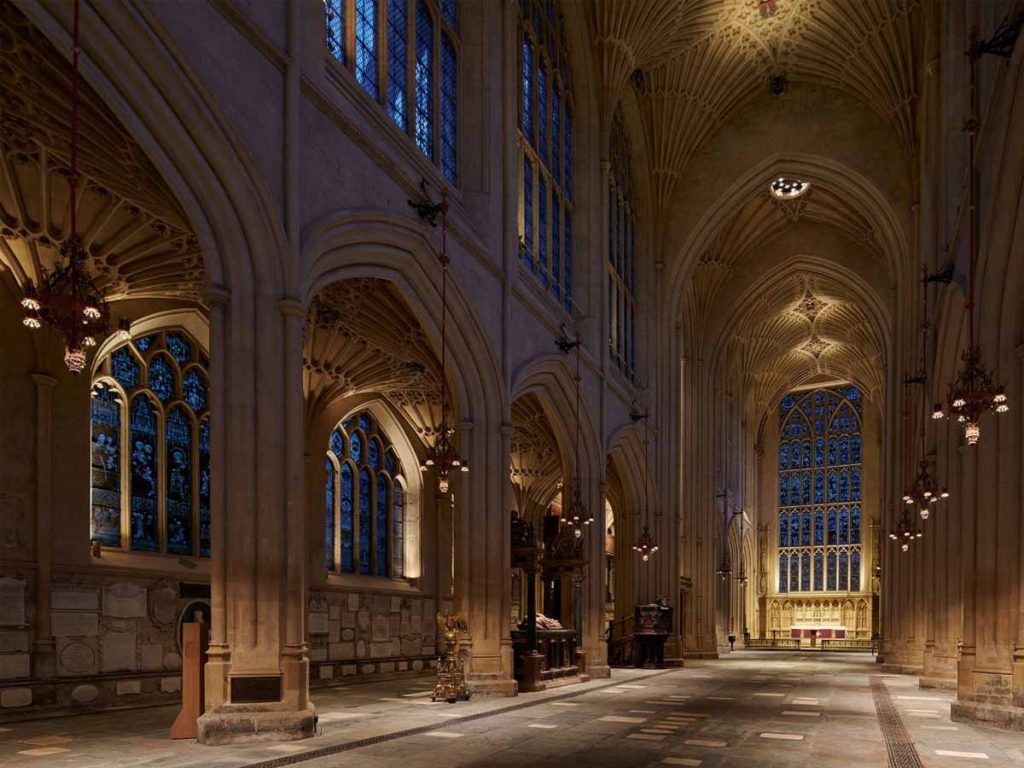
2021 – Bath Abbey by Michael Grubb Studio
Winner of the 2021 [d]arc awards was a £19.3 million restoration and transformation programme designed to preserve Bath Abbey’s heritage while introducing sustainable, modern solutions. Led by FCBStudios and Michael Grubb Studio, the project features an innovative lighting design that highlights the Abbey’s intricate architecture - from the fan vaulting to Georgian memorials, through energy-efficient LED systems and advanced DMX controls. The scheme not only enhances the Abbey’s spiritual ambience but also provides flexibility for diverse events.
https://darcawards.com/best-of-the-best/
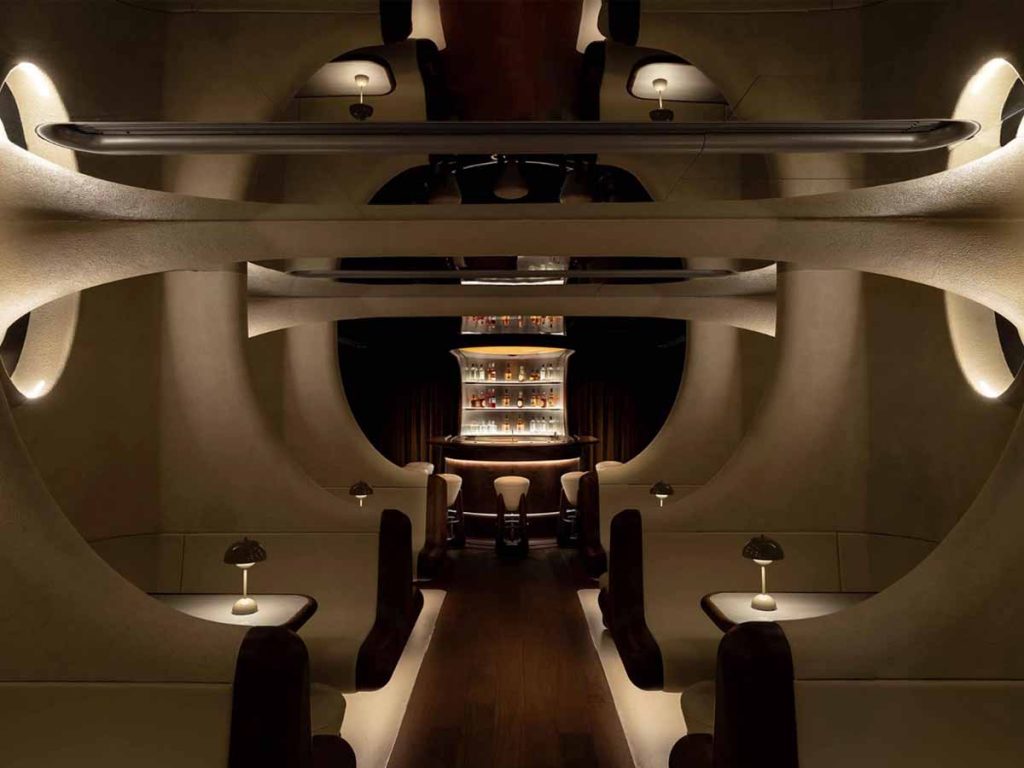
2023 – Artifact Bar by Light Origin
Winner of the Structures - Low category, and Best of the Best winner 2023, is a hidden speakeasy bar located in the basement of BaseHall Central, Hong Kong. The bar draws inspiration from the rhythmic patterns and serene yet dramatic ambience of underground cisterns. Guests enter through a secret passage featuring industrial pipe-like windows and digital light art that sets a mysterious tone. Inside, a mirrored ceiling creates an illusion of infinite height, while sculptural rib-like forms and a glowing circular skylight evoke the warmth of a sunset. Intimate booth lighting and soft under-seat illumination enhance the space’s immersive and dreamlike atmosphere. Despite challenges such as limited ceiling height, the team cleverly integrated lighting within architectural details to achieve both function and artistry. With 90% of fixtures locally sourced and LED-based, combined with efficient dimming controls, Artifact exemplifies how sustainable lighting design can elevate ambience and imagination in equal measure.
https://darcawards.com/best-of-the-best-2023/
2024 – Thames City by Foundry
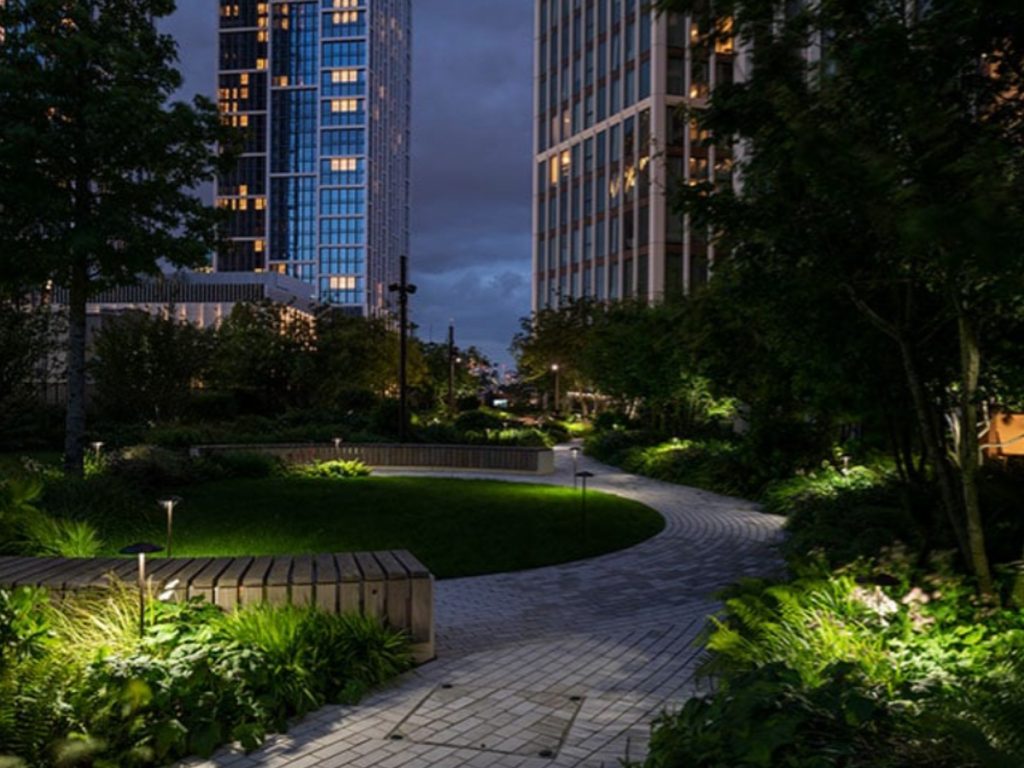
Winner of both the 2023 [d]arc awards Spaces category and Best of the Best, Thames City is a landmark redevelopment transforming 10 acres of former industrial land in Nine Elms into a vibrant, mixed-use riverside destination. Designed by Foundry, the lighting scheme enhances the sensory experience of the landscaped courtyards, podium gardens, and linear park, using a delicate balance of warm light and shadow to reveal textures of stone, foliage, and water. Low-level and column lighting create intimacy, guide movement, and highlight architectural features, encouraging visitors to slow down and engage with their surroundings. The result is a refined, atmospheric design that celebrates both nature and urban life after dark.
https://darcawards.com/portfolio/thames-city-uk/
The 2025 [d]arc awards are now open for entries! Whether you’ve created a ground-breaking architectural lighting scheme, an experimental installation, or a beautifully crafted product, this is your chance to be recognised on the global stage.
Winning Best of the Best means joining an elite group of designers and studios whose work has inspired the industry worldwide. The 2025 celebration will once again take place at Woolwich Works, London, bringing together professionals from across the international lighting community for an unforgettable night.
Enter your project now and you could walk away with not one, but two [d]arc awards.
www.darcwards.com/enter-the-awards
IALD Enlighten Americas Illuminates Tucson
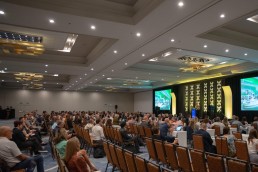
(USA) – The International Association of Lighting Designers (IALD) held its annual Enlighten Americas conference on 9–11 October 2025, bringing together more than 350 lighting professionals, educators, students, researchers, and manufacturers from 18 countries.
Held in Tucson, Arizona, the three-day event offered an extensive programme of seminars, roundtable discussions, and networking opportunities. More than 30 sessions explored a range of creative, technical, and ethical topics aimed at advancing knowledge and collaboration within the field of architectural lighting design.
A recurring theme throughout the conference was the growing global conversation surrounding light pollution and the ‘dark sky movement’. The issue featured prominently in several sessions and informal discussions among delegates.
IALD President Andrea Hartranft noted the significance of addressing these topics in a location renowned for its observatories and commitment to preserving the night sky.
Hartranft comments: “From the opening keynote with an incredible light pollution scientist to the closing session with DarkSky International’s top executive voice, our agenda makes clear the importance of the natural world in a profession built upon artificial light. Here in Tucson, the city where the ‘dark sky movement’ was effectively founded, that’s no small statement.”
The conference opened with a keynote address from Amy C. Oliver, Public Affairs Officer and Science Centre Manager at the Fred Lawrence Whipple Observatory. Her presentation, Glow Responsibly: Honouring the Beauty of Human Design and Natural Darkness, explored the effects of artificial light on ecosystems and urged designers to adopt responsible lighting practices ahead of regulatory requirements.
The closing keynote was delivered by Ruskin Hartley, CEO of DarkSky International, who emphasised the need to design lighting that is “smarter, not brighter”. He highlighted the environmental impacts of excessive illumination and left attendees with a call to action: “What are you going to do about it?”
The event also recognised outstanding contributions within the lighting design community. Five professionals – Teal Brodgen; Jill Cody; Ron Kurtz; Aram Ebben; and Mônica Luz Lobo – were inducted into the IALD College of Fellows for their significant achievements and service to the profession.
A highlight of the ceremony was the presentation of the IALD Lifetime Achievement Award to Randy Burkett. The honour acknowledged his extensive career in architectural lighting design, longstanding volunteer service, and dedication to the advancement of the field. In his acceptance remarks, Burkett expressed gratitude to his peers and reflected on his journey from small-town beginnings to working on some of the United States’ most recognisable landmarks.
The IALD Enlighten conference series will continue in 2026, with Enlighten Europe taking place in Paris, France, from 17-19 June, followed by Enlighten Americas in Austin, Texas, from 15-17 October.
Workplace Design Show announces theme for 2026 edition
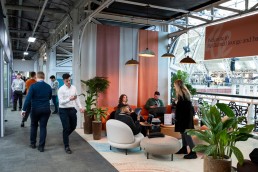
(UK) - The newly announced theme for Workspace Design Show, Connected Realities, invites the industry not just to attend but to participate in a collective showcase of how work can evolve when physical and digital no longer compete but collaborate.
Taking place from 25–26 February at the Business Design Centre, London, this edition encourages exhibitors and visitors to explore how hybrid models, immersive technologies, and intelligent environments are transforming the modern workplace — not just as spaces we use, but as environments we experience, engage with, and belong to.
“We’re moving beyond furniture and floor plans. Today’s most successful workplaces behave almost like living organisms, responsive, sensory, and human,” says Esha Bark-Jones, Event Director for Workspace Design Show. “Connected Realities is a celebration of that evolution, the moment where physical design and digital intelligence finally operate in harmony.”
Rather than treating the theme as a backdrop, Workspace Design Show is turning it into a full-scale design challenge, asking exhibitors to interpret Connected Realities through the way they build and behave within their stands. Whether through AR-enabled product demos, blended material palettes, live data walls or wellbeing-driven sensory environments, the show floor is set to become a living exhibition of this reality’s workplace behaviour.
Leading brands have already confirmed participation in the challenge, alongside design partners Gensler, Peldon Rose, MCM Architecture, M Moser Associates, and Area, who will help bring the theme to life.
On day one of the show, the inaugural Workspace Design Awards will take place, celebrating completed workplace projects from around the world. The Workspace Design Awards are assessed by senior occupiers, developers and workplace transformation leaders, meaning entries are evaluated from the perspective of the people who actually live with the results.
Entry is free and open to architects, interior designers, design consultancies, fit-out companies, occupiers, developers and workplace strategists for projects completed between 1 January 2023 – 30 October 2025.
History of Darkness: Values of Darkness Throughout Time
 Roxana Rakhshani, Senior Lighting Designer at Cundall, breaks down humanity’s relationship with darkness throughout history, and how lighting designers can factor darkness into their work.
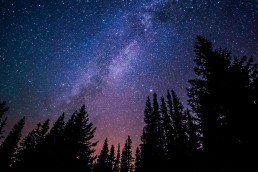
I’ve borrowed this title from an intriguing artwork by the Scottish artist Katie Paterson, which includes hundreds of slides of the darkest parts of the night sky.
Darkness is a quiet treasure, too often overlooked and too easily feared. As Robert Hensey notes in The Archaeology of Darkness, “[Darkness] it is too big to see, too fundamental, too pervasive.”
As a lighting designer, I recognise that darkness holds as much value as light. They are deeply intertwined, forming a harmonious whole. Darkness has often been unjustly associated with evil and threat. In our efforts to escape this perception, we have flooded our evenings with electric lights. We are led to believe that darkness breeds crime and danger, prompting us to illuminate every corner of our towns in the name of “secure by design.” Yet we cannot study darkness as we study light. We cannot hold it, photograph it, or capture it. We can only sense it, embrace it, and live it. I believe darkness is not the absence of light. It exists.
Birth of Darkness
Our relationship with darkness begins with the Big Bang, around 13.8 billion years ago. At first, the cosmos was not dark at all – it blazed with high-energy photons, a searing plasma of matter and light intertwined. Yet this light was trapped, scattered endlessly by a fog of free electrons that kept the universe in radiant opacity, a brilliance locked within the newborn cosmos.
Only after 380,000 years did true darkness emerge. As the universe expanded and cooled, electrons joined protons to form neutral hydrogen atoms. After hydrogen formed, photons continued their journey, interacting only slightly with matter. Initially in the ultraviolet range, these photons stretched into microwaves as the universe expanded. This is why the Cosmic Microwave Background (CMB) offers a “snapshot” of the universe shortly after hydrogen formed. Yet though light now travelled, the visible universe remained dark to any hypothetical human eyes.
The CMB’s glow, was far from the bright starlight we know. Thus began the Cosmic Dark Ages, a vast stretch of time without a single star. For hundreds of millions of years, the universe lay in shadow. Darkness was the dominant state.
Between 100 and 200 million years after the Big Bang, gravity coaxed the first stars into being. Their nuclear fires pierced the darkness, flooding the cosmos with visible light for the first time. Darkness lost its monopoly but never disappeared, always retreating just beyond the edge of light.
Nine billion years after the Big Bang, our Sun ignited, and Earth began to form. In its oceans, single-celled life stirred – emerging 500 million to a billion years later.
For three billion long years, the planet waited before the first eyes to open and gaze upon the world. Until that moment, darkness and light were without witness, and thus without meaning.
Early Humans and the Fear of the Dark
For early humans, darkness was no passive backdrop – it pulsed with danger, beyond the reach of firelight. Predators prowled and vision faltered; fear of the dark became a survival instinct etched into our bones.
Even now, night stirs ancient anxieties, its shadows echoing the primal dread of our ancestors. During the Jurassic, mammals evolved rod cells for low-light vision to evade daytime predators like dinosaurs. Yet humans remain diurnal, lacking the tapetum lucidum that boosts night vision in nocturnal animals.
The subconscious brain also contributes to darkness. Our amygdala – the centre of fear – is activated, triggering heightened vigilance. Without sight, our imagination conjures shadows into threats – the proverbial “monsters under the bed.”
Yet early humans also sought the darkness of caves for shelter. This motherlike darkness was a womb protecting the child. Darkness became a canvas for human art and rituals. When early humans tamed fire, cave walls flickered with living shadows, their art animated by flame.
In darkness, stories of the daily hunt came alive – fire and shadow weaving myth from stone. Darkness was an essence to bring these stories to life.
Darkness Across Ancient Cultures
Prior to the science of how light and darkness emerged, different cultures and beliefs had a variety of interpretations of how this world has come to live. Most of these beliefs involved the dual existence of darkness and light. Some had them both at the same time, while other cultures believed it was darkness and then light.
For the Greeks, the cosmos emerged from Chaos: a dark, formless realm of potential. From it came Erebus and Nyx, birthing light and day, showing darkness as the womb of creation.
Creation in Egyptian myth begins in Nun, a dark ocean of chaos, where the Ogdoad – eight deities including Kek and Kauket – embody obscurity. From this void, Atum-Re emerges, shaping light and order from the depths of darkness.
In Manichaean dualism, light and darkness are eternal forces whose mingling births the material world. The battle between these forces creates the balance of day and night.
The Biological Necessity of Darkness
Darkness is an active, soft-spoken force that shapes our biology and restores balance. As evening falls, it whispers to the pineal gland, coaxing the release of melatonin, the quiet architect of sleep and guardian of our circadian rhythm. We close our eyes and walk into darkness to find peace and comfort. For the fortunate, sleep becomes an escape from life’s stresses.
When night is fractured by screens or streetlamps, this rhythm falters, bringing restlessness, mood disorders, and diminished vitality. Darkness offers more than sleep, it shelters our eyes from the strain of unbroken brightness, allows the retina to recover, and grants the mind rare stillness.
Darkness shields the immune system, calms the nervous system, and for children, lays the foundations for growth and learning.
The Design of Darkness
Darkness is the cradle of our history, the silent force shaping our beliefs, our bodies, and the way we see the world. Without darkness, there is no contrast, mystery, or wonder. Without darkness, light loses its poetry. In the realm of lighting design, the interplay between light and darkness becomes an art form, a dance that shapes our experiences and perceptions.
We need time and space to experience darkness. By embracing darkness, we can create environments that invite exploration and contemplation. We can enhance the texture of materials, highlight architectural forms, and foster a sense of intimacy, allowing us to connect more deeply with our surroundings.
In the era of electrical light dominating our world, we must advocate for designs that respect the natural rhythms of darkness. Working on Dark Sky projects allowed me to learn how to consider how a well-placed lamp can illuminate a gathering without overwhelming the night, and its precious gift of peace, allowing the stars to shimmer above and the moon to cast its gentle glow.
As lighting designers, we must honour this truth with reverence and courage. Darkness is not absence, it is presence, the depth giving life to illumination. We must design our projects with shadow, celebrate it, worship it, and invite it into our spaces. Shadows don’t have to be obvious, grazing a rough textured wall, creating thousands of little shadows that make the texture visible. Imagine using a tree clamped luminaire in a park, that gives us dancing shadows of the leaves and brings the darkness to life.
We must see the yin in yang, and avoid a “blanket of light”. Darkness can frame the beauty of the light shining on an object or an artwork. Pockets of darkness can create a pathway and guide us through our journey.
To truly shape light, we must also shape darkness.
Let us become “darkness designers”.
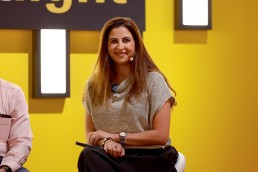
Nadine Baalbaki
At Light + Intelligent Building Middle East earlier this year, Lebanese lighting designer Nadine Baalbaki delivered a stirring presentation titled “Not All Dark Skies Are Happy Skies”, sharing her own experiences of “light poverty” in a war-torn country. Here, Baalbaki tells us more about these experiences, and why when we talk about dark skies, we need to take a more contextual approach.
Attend any lighting trade show, conference or talks programme around the world, and chances are the topic of dark skies will be present in some capacity. Indeed, conversations surrounding light pollution, and preserving the night sky have been on the lips of many lighting professionals in recent times. However, while this is still an important discussion, there is one designer who is calling for more contextual understanding, and recognition that “not all dark skies are happy skies”.
Based in Dubai, but born and raised in Lebanon, lighting designer Nadine Baalbaki, founder of Light The Detail, first spoke on the need for cultural and contextual sensitivity surrounding the concept of “dark skies” at Light + Intelligent Building Middle East in Dubai earlier this year – with specific reference to her own upbringing in a war-torn country, where a dark night sky would bring with it fear and uncertainty.
Speaking to arc, Baalbaki says: “The idea for my talk came a year before, when I was attending a talk, and the presenter showed a picture of the night sky of the UAE during the pandemic, where lights were turned off because nothing was functional.
“He praised the image and identified it as an ideal situation, and if I put my lighting designer hat on, I would agree, but when I saw the image, I felt a really heavy feeling. I delved deeper into that feeling and tried to identify my relationship with dark skies, and I could recognise that darkness brought back underlined traumas.
“I knew that this has to do with my upbringing in a country where we were living with severe power cuts through times of war, and where darkness at night became a synonym for fear. Dark sky was not security or safety, it was not looking at the stars and contemplating the beautiful night sky, it was moving away from the windows in case of any bombings. It was fear and anxiety in its purest form.
“All of these feelings emerged in a split second when I was confronted with that image. Yes, we want darkness, and I agree that the impacts of light pollution are detrimental, but we need to address the topic with more consideration. I wanted to convey a message that in order to reclaim night skies, we need to examine where people are coming from and how their relationship with darkness is shaped.”
Baalbaki lived in Lebanon for most of her life, studying architecture and gaining a Master’s degree in the subject from the Lebanese University. However, she made the decision to move to Dubai in August 2013, seeking a better environment for her young family at the time.
“The decision to move to Dubai was made because we didn’t want our kids to live through what we had in Lebanon, through wars and economic crises. So, we decided to move to the UAE seeking peace and mental wellbeing, rather than job opportunities.”
Growing up in such a tense environment meant that Baalbaki didn’t have early career aspirations in the same way that others may have done. “When you are growing up in a war zone, it doesn’t feel like you have a lot of aspirations,” she says.
“Sometimes I felt like I wanted to be a fashion designer, and I used to draw dresses, but to feel like you are inspired to be something is different when you are in this context. As a kid, when you dream, you dream of a stable life, to be able to make it to school on time and take part in your extracurricular activities, which often got cancelled because it was not safe. It was an interrupted cycle of aspirations.
“And because you are living in a context where everything needs to be rationalised, you need to think of a career that has more future. As much as I wanted to study psychology or photography, the future was not bright for these career paths in Lebanon back then. Architecture was more of a middle ground that I reached because I wanted to major in a creative field, but with a more safe and calculated future.”
As with many people that find themselves in the lighting industry, Baalbaki first discovered the world of lighting during her studies in architecture. Months before submitting her final thesis, she was contacted by a friend, who briefed her about an opening at Hilights, the lighting design company they worked for. She was offered the job on the spot at her interview, and has never looked back.
“In Lebanon, lighting design as a profession was not well known 21 years ago. When I told my father that I wanted to pursue it, he thought it simply meant placing chandeliers in the middle of a room, he was not aware of the prospects of the profession. That’s when I realised, if this profession exists and so few people know about it, then it must be a niche worth exploring. From the very first project I worked on, I knew instantly: this was it, this was where I belonged.”
After spending eight years with Hilights in Lebanon, Baalbaki took a career break of a year to focus on her young family – it was during this time that she moved to the UAE. Once settled in Dubai, she shifted her attention from design to manufacturing and business development, working as a Project Manager for Vbomedioriente – a Middle Eastern distributor for Viabizzuno – before eventually returning to lighting design, and establishing her own studio, Light The Detail, in 2023.
“The concept for Light The Detail began a few years earlier as a social media platform dedicated to highlighting the importance of lighting on our wellbeing. When you step into the field of lighting design, you quickly realise that while light profoundly affects our mood and mental health, its impact often goes unnoticed because it isn’t tangible. For instance, if you visit a doctor with back pain, they’ll likely ask about your exercise habits or whether your mattress offers proper support. But if you arrive with stress or recurring headaches, it’s unlikely that anyone will question whether poor lighting might be part of the problem.
“When I founded Light The Detail, I noticed a gap in how we communicate about lighting. As professionals, we often exchange ideas within the industry, but we rarely speak to the public in simple, relatable terms. I wanted to change that by explaining concepts like glare, colour temperature, and perception, and by showing how light shapes our mood, wellbeing, and mental health. What started as a space to share knowledge and raise awareness gradually grew with me. In 2023, I chose to redirect my path and fully embrace lighting design, so I rebooted it as a design studio.”
Since returning to lighting design, Baalbaki’s work has primarily been focused on the residential market across the Middle East, although she does also dabble in F&B, retail, and workspace projects. Throughout all of these though, she strives to adopt a human-centred approach.
She says: “When I started working in the lighting industry, I was told to focus on the visual aspect of lighting. But now, I feel like I’m more focused on the human being, on the people living in the spaces. Because I work a lot on residential lighting projects, I try whenever possible to meet the clients. Working in Dubai has presented me with the opportunity to work with a wide array of clients from different nationalities; with each nationality comes a certain character and certain relationship with light. At this stage, it’s crucial to consider who we are designing the lighting for – especially in residential spaces, where people will live with this lighting for years to come.
“My style is therefore more human-oriented, focused on the people who inhabit the space. I favour a subtle, minimalistic approach, aiming to let the light stand out rather than the light fixtures.”
This human-oriented approach to lighting has helped to give Baalbaki a broader understanding of the individual and cultural nuances of lighting design, something that contributed further to her feelings surrounding dark sky sensitivity. “Even in countries where light is abundant, people’s experiences of the night, or of darkness, can be negative, and they may respond by using excessive light,” she adds. “Understanding these perspectives is something I wanted to bring to the conversation. There are many discussions about light pollution and the importance of protecting dark skies, which I fully support. But to be effective, we also need to understand why people fear darkness and why they feel the need for so much light.
“It’s not easy; since the beginning of humanity, light has been associated with safety. Prehistoric people lit fires not only for warmth but to ward off predators. So, when we suggest reducing light or embracing darkness, it can provoke fear or anxiety among different communities.
“In Lebanon, for example, you wouldn’t see much advocacy for dark skies. Discussions focus more on how to provide illumination as a means to improving safety, security, and social engagement, while also preventing economical isolation. Yet these conversations often come from a place of privilege, where people have control over their light. They don’t usually emerge from deprived communities.
“It is true that ensuring safety and security in communities is fundamentally the responsibility of government authorities and requires the collaboration between several governmental bodies to implement effective strategies to fight crime. It is not the direct responsibility of the lighting design community.
“Although there is no conclusive evidence that increased outdoor lighting deters crime, light remains a factor that increases the perception of safety. In light deprived and unsafe neighbourhoods, communities tend to correlate light with safety and security. This is why broader discussions with governmental entities are essential: only when there is trust in the system can people begin to feel comfortable engaging with darkness.
“At the moment, the approach to these issues remains very global and generalised, and when solutions are generalised, sometimes the impact of those measures falls short. So, I think it is very important to look at the regional context.”
Even within these regional contexts, Baalbaki acknowledges that the root causes of light pollution can vary greatly, from elevation lighting, to road lighting, stadium facilities, and electrical boards and signage – a particular concern for herself in Dubai.
Because of this, she feels that a lot more work needs to be done on defining the dominant causes in each city and region, and to “tackle them systematically one by one”.
“In addition, we have lost the definition of nighttime as human beings, and when that happens, we lose our dark skies. Our lifestyles revolve around working during the day and living, working, socialising at night, we re-purposed the night function from resting to harvesting. Lighting doesn’t exist in isolation; it follows people, functions, cities and urban developments. When a city grows or aims to operate 24/7, lighting inevitably follows.
“It is a difficult balance, there is not just one aspect to look at, there are global factors. In order to make an impact, we need to read these factors, and dive deeper into regional and city-oriented approaches towards light, towards fighting light pollution.”
Following her presentation at Light + Intelligent Building Middle East this January, Baalbaki is hoping to spark a response in the lighting design community, and expand the conversation on a more global level.
“I was pleased with the audience’s response. Many were aware of concepts like light poverty, but sharing my personal experiences – how darkness affects me and shapes my approach to nighttime – resonated more deeply.”
More than anything though, Baalbaki hopes that, by expanding this topic beyond the region, she can help spread her message to re-address the imbalance in terms of light access and light poverty, as she states, “while people are sometimes suffering from excess of light, people from other places are suffering from a lack of it.”
She concludes: “I want to explore further how people would respond to darkness when they have lived their life under light deprivation? How do they perceive and interact with light? When does light becomes excessive? And can light poverty lead to light pollution? For Instance, I have noted a general response among Lebanese people when visiting Dubai. They are generally delighted by the abundance of light and they perceive it as a positive aspect in the city and do not recognise and acknowledge it as lighting pollution.
“To address light pollution and improve our relationship with the night, we first need to understand where people are coming from and how they experience darkness. Only then can we reconnect with the night as a natural and essential part of life.”
www.instagram.com/lightthedetail
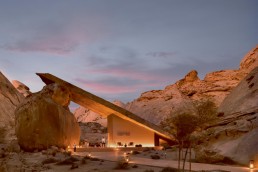
Desert Rock, Saudi Arabia
Carved into the rocks of the Red Sea desert lies a unique hospitality destination. Delta Lighting Design explain how light helps to bring Desert Rock to life.
Emerging from the rugged terrain of the Saudi Arabian desert, Desert Rock is a resort like no other. Tucked away in a secluded valley within The Red Sea destination, the resort has been literally carved into the terrain itself, merging seamlessly with the surrounding mountains to form a truly unique masterclass in contextual architecture.
Designed by Oppenheim Architecture, with interior design by Paolo Ferrari, Desert Rock sets a new benchmark in hospitality and design; architecture and geology converge where rock formations and sophisticated structures blend effortlessly, creating a breathtaking sanctuary where nature and innovation co-exist in perfect harmony.
Across the resort’s 54 private villas and 10 elegant suites, each embedded within the dramatic plateau – whether high up on the rocky outcrops of the Massif mountain, or low down on the Wadi valley – guests are treated to a setting that is completely at one with the raw, natural environment, with each room offering uninterrupted views that stretch toward the horizon.
Elevating the retreat further are state-of-the-art amenities, including a world-class spa and fitness centre, remote destination dining, and a signature lagoon oasis. Guests can engage with the dramatic surroundings through guided hikes and dune buggy adventures, or take in the stunning views to the night sky through celestial stargazing – all part of a curated programme designed to celebrate the majesty of the land.
Integral to bringing this one-of-a-kind destination to life was a lighting scheme that would further champion the unique location. Delta Lighting Design developed the lighting concept for Desert Rock, joining forces with Oppenheim Architecture in the early concept design stages of the project.
Mohamed Medani, Partner and Design Director at Delta Lighting Design, reflects on the initial design conversations with the architects: “Since the early studies of the concept design, we were a part of the discussion, and our role was to shape the nighttime experience and create a narrative that responds to the exact envelope of the project.
“The character and the natural landscape of Desert Rock’s surroundings is clearly the champion and the focal point, so as much as possible we wanted to preserve and enhance this with lighting.
“The main drive for us was to maintain this existing nighttime surrounding with as minimal interruption as possible, while trying to create a place within this amazing space where you can really enjoy your time, enjoy your privacy and your own surroundings. It’s not just a trip into the wild, it’s also a place where you can, within these interesting surroundings, have your own private, high-end, luxury experience as well. It became a delicate balance between maintaining the landscape and making this one of the main parts of the design and the story, but also providing this luxury look and feel.”
To that end, the intent for the lighting design was to reveal, not dominate, with a focus on exposing the raw beauty of the rock’s textures and forms where the architecture meets the mountain through carefully positioned, low-level lighting.
Building cores are softly animated through controlled contrast, adding depth and maintaining a sense of liveliness, enhancing the contrast between the interiors and exteriors, and magnifying the depth of perception within the façades. Interior lighting glows from within, turning buildings into large-scale lanterns, nestled among the elevated, contoured natural structures.
“You want to bring some of the outside into the interior spaces. At the same time, you also want to retain the functional aspects of maintaining a luxurious hospitality environment. It was a very strong contrast that we tried as much as possible to make visible. We wanted to embrace it.
“We wanted to highlight and make a focal point of the rocks and the texture of the walls within the interior space, so that you are always reminded of the surroundings and where you are in the interesting landscape.
“We wanted to avoid creating an environment where you are completely detached from your surroundings, where you go to your room and forget where you are; there is always a highlight to the elements to give you a reminder of where you are within the hotel.
“That balance adds to the unique hospitality experience. You do not very often stay in a resort where you have a wall from a natural mountain behind your bed, or you walk through a cave that is actually the guest room corridor. These experiences are striking for the users, and we amplified that impact at night.
“We also tried to focus on what could be natural in a cave, and how this would be illuminated. That’s why lighting is kept to the walls or on the floor, as much as possible; we tried to avoid overhead lighting, because it doesn’t give any interesting value to the vertical surfaces, which are quite rich in this project. Where possible, everything was mounted on the floor, with in-ground uplighting within the rooms themselves highlighting the walls. What is bringing the functional lighting to the space is indirect lighting from the vertical surfaces, and also indirect lighting coming from the floor. So, when you look at this from outside, you almost feel like there is a torch or a natural fire source within the balconies and guest rooms – it gives you a natural impression.”
Across the resort, enhancing this more authentic, low-level lit environment, Delta Lighting Design developed a bespoke, multi-functional lantern that would meet both aesthetic and sustainability requirements, while aligning with the overall hotel design vision.
The bespoke design draws inspiration from the traditional lantern form, with a sleek, minimalist frame and a decorative candle to create a warm, inviting ambience. Crafted from slim-profile aluminium with a matte, dark brown finish, the lanterns have no glass enclosures, reducing dust build-up and allowing light to diffuse softly across the ground.
The lantern top houses an integrated, diffused light source that shines downwards, providing suitable light levels for circulation areas, while an electric candle is added to the core of the lantern for decorative purposes. The two light sources are controlled separately, enabling multiple lighting scenes, and allowing the fixture’s appearance to evolve throughout the evening.
Installed in hardwired clusters, these lanterns create a poetic, immersive atmosphere that enhances the guest experience, serving both as practical luminaires and narrative-driven design elements that echo the raw, sculptural elegance of the desert landscape.
Medani explains the design of these luminaires further: “We wanted a minimalist fitting that would not really stand out as an element competing with the surrounding environment, but would blend in with the architecture.
“At the same time, it’s a hospitality environment, so we wanted an element that would give the luxury and warmth. The third aspect is the functionality that needs to be accomplished by the design of this specific lantern. So, we came up with a minimalist form, but with the different lighting elements inside, the lanterns can be used across the site, and although they all look the same at daytime, at night, they bring a different character, depending on their location and how they are being used.”
When visiting Desert Rock, guests begin their journey at a small arrivals hub nestled into the foothills – lighting here is seamlessly integrated into the bespoke millwork, with linear fittings providing subtle, directional accents that frame the space without imposing on it.
From here, guests take a buggy up the valley and to the mountain, where the main hotel building emerges. As they travel through the valley, lighting was purposefully kept at a low level, preserving the views to the night sky, while building drama and suspense as the resort comes into view.
“As you approach the mountain in front of you, you start to see the sparkle of the rooms, the illumination of the caves, you get a taster of what is waiting for you, which adds to this experience as you travel from the wilderness into this luxurious, cosy place,” Medani adds.
Central to the design though, was an “intentional restraint” that focuses on the uninterrupted views towards open landscapes. Every light source is soft, shielded, and purposeful; stone becomes luminous, and stars shine freely, inviting guests to embrace an authentic dark sky experience.
This is something that was of paramount importance to all parties. Andrew Bates, Associate Director of Lighting at Red Sea Global, explains further: “Desert Rock has an in-house lead astronomer that, on a regular basis, is running astronomy sessions for guests at the resort on top of the restaurant. So, it is critical – not just because of our Dark Sky policy, but also from a guest experience, so that they can understand the culture and the history of the area – that we maintain a low level of lighting around the whole destination.
“There was a big conversation in the planning stages about how we as a developer have a Dark Sky Initiative, where we’re trying to maintain the pristine skies and the visibility of the stars, and how we safely illuminate the project while doing this. There is a lot of rough terrain, with steep hills, etc; how do we make sure our guests can safely navigate the space at nighttime without floodlighting the whole site, while retaining the authenticity of this candlelit, cave-like environment.
“We have to be mindful that every light that we add in to an exterior space is taking us a step away from the purity of the dark sky. So, we always have to question why we are adding the lights. It becomes a balance between safety, the guest experience, and seeing the night sky. There were some decisions that were made during the design stages that were then refined once we did some assessments on site, which were linked to safety.”
Even with the Dark Sky aims for the project, Bates explains that, as the project was drawing to a close, some additional lighting was added to the mountain itself to frame the hotel and provide some further context, particularly for those dining in the restaurant area after dark, where there would have been little visual clarity as to their location.
“We did a lot of testing with various fixtures, accessories, beam angles, colour temperatures, locations, etc, to ensure that the mountains were lit as delicately as we could. As we extended the coverage and added a narrative of when to light the mountain and to what intensity, we did a number of light pollution readings around the site to check what impact it was having. We got to a point where, with the mountain lighting at 40% intensity, it had a negligible impact on the sky quality readings that we did, but it really brings a sense of depth that adds to the guest experience.”
Alongside the Dark Sky goals for Desert Rock, Bates explained some of the more strenuous logistical challenges that came in bringing this awe-inspiring project to life.
“Getting materials up the mountain was a very physical challenge; we have an observation deck, which you access via a rope bridge, and then several hundred steps to the top, and getting material up there was all done by people power, we had no cranes, so that was very intense as well.”
Because of the very essence of the resort being carved into the mountain itself, Bates adds that, once each of the rooms had been excavated, further on-site alterations had to be made when it came to installing the lighting.
“On the drawings for the cave rooms, we had a number of uplights accenting the walls left and right – in the drawing, there is a planned layout, with an outline of what the room would look like. But, when they did the carving, it’s not like putting up a timber stud wall, where you know what the offsets are going to be. There were a number of rooms where we had to assess the location of the uplights depending on the actual finishes of the wall. Some of the walls are steeper than we thought, some are shallower, some were bigger or smaller – there were a lot of tolerances that we had to work around. So, we ended up adjusting the lights to meet those on-site surprises.”
Similarly, on the outdoor paths that weave between large rocks, Bates and his team relocated a number of the bespoke floor lanterns to fit better with the natural landscape. “We shifted the location of fixtures to suit the site, for example, at the main entry to the resort, there is a passage where the path meanders through these large rocks. By luck more than judgement, there were some nice little nooks where we could place the lanterns, but we wouldn’t have been able to do this from the drawings.
“After multiple lighting mock-ups and testing, we also adjusted the colour temperature of the exterior lighting from 2700K to 2200K, as, once on site, we felt that the warmth added an extra ambience to the colour of the stone and the texture on these pathways.
“A lot of the work that we were doing was responding to the site conditions, taking the design principle and then tweaking it to suit things that you can’t know during the design stage.”
However, these challenges and on-site tweaks notwithstanding, Bates says that he is “super proud” of the result that has been achieved, and of having the opportunity to create such a unique, one-of-a-kind destination.
“I very much had a connection with this project from the start because it is so unique,” he says. “It’s not been done before, especially at this scale – it is a very James Bond, Mission: Impossible-esque setting, so I was incredibly proud of following this through to completion.
“When you’re working on a project most days, in the heat and late into the night, you don’t really feel like it is such a special project, but when you see guests arrive, and you see their reaction when they see it for the first time, and when they look up and see the stars, it feels like you’re in a different world – it’s like a movie scene.”
Similarly, Medani looks back on the project with satisfaction, knowing that the lighting design greatly contributes to the creation of such a unique environment.
“We knew that our approach to this one had to be different, it had to be unique. We had to make sure that we flush everything conventional off the table and figure out a solution that would maintain this interesting experience for the users, achieve the necessary functionality, and give an interesting vision from outside. At times it was challenging, but also enjoyable to go through this and come up with the result that we see in the end.
“What is quite striking is that a lot of the comments that we have seen on the internet are saying that this is AI, it can’t be real. But with that, you feel that the project is really great – people thinking that this is not a reality means that you have offered a totally new experience to users.
“It is exciting to see a place that is outstanding by itself, manage to host a cosy, luxurious space within it, where people can really enjoy the experience. Otherwise, you would pass by in a car and not see it. We have brought a very remote, untouchable place to a lot of people now. It can give you a lot of joy to work on these projects, where you bring the human experience to a new place, to new areas, and new experiences.”
Rising from the ground, Desert Rock is a truly unique hospitality offering, with a sensitive and beautifully restrained lighting scheme to match. As many new developments around the world look to create stunning pieces of architecture that stretch high above the ground, sometimes it is important to remember that connection with the earth itself, and Desert Rock shows that in doing so, one can create truly remarkable experiences to savour and remember.
Client: Red Sea Global
Lighting Design: Ziad Fattouh, Mohamed Medani, Dimitris Theocharoudis, Daniela Meneghelli, Raluca Dascalita; Delta Lighting Design, UK
Architect: Oppenheim Architecture, USA
Interior Design: Studio Paolo Ferrari, Canada
Lighting Specified: IBL, iGuzzini, KKDC, L&L Luce&Light, LEDFlex, LED Linear, Linea Light Group, Louis Poulsen, Lucent, MP Lighting, Orluna, Unonovesette
Photography: Alex Jeffries; John Athimaritis
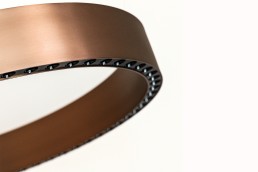
Neko Lighting - Space 16
Space 16 Ring combines ambient and accent lighting in one pendant. Featuring upward and downward illumination, electroplated finishes in refined metal tones, and an adjustable concealed lifter, it delivers both design flexibility and contemporary elegance for dining, lounge, or reception applications.
