
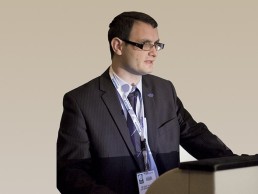
Geoff Archenhold: 2017 - more structural changes are coming
With major western brands going through divestment, and Asian brands starting acquisition of global market share, can the lighting industry still be relevant in a highly commoditised sector? Dr Geoff Archenhold investigates.
In 2016 the majority of western lighting brands confirmed that between 50 and 80% of their lighting portfolios had already converted from traditional light sources to LED based artificial lighting sources – a major achievement considering my first article eleven years ago had LED penetration at less than 0.1% of the market.
The rapid pace of R&D and those early LED pioneers have transformed the lighting sector within a decade, yet the majority of products being shipped at a luminaire level are virtually the same formats as traditional light source equivalents, which suggests further design revolutions could be on the horizon. The rush to deliver the energy efficiency gains of LED luminaires has resulted in an unprecedented level of cost reduction that will make it difficult for companies to continue the pace of R&D and product launches moving forward – so what next?
FURTHER MARKET CONSOLIDATION
In 2016 we have seen more divestments or division/plant closures from the large players such as Philips, OSRAM and GE and the rise of Asian acquisitions such as Havells and Bridgelux. As prices fall, the LED supply chain (as with other industries) are a prime target for large scale consolidation, especially from Asia where acquiring brands and new routes to global markets make strategic sense whilst low cost money is still readily available. From the failed acquisition of Lumileds to Grand Chips Investment’s proposed acquisition of Aixtron and the purchase of Sharp by Foxconn, we will see a significant increase in acquisitions over 2017. Indeed, within the next two to three years we may see the big two or three lighting companies acquired but only once their senior management teams have divested the non-profitable parts of their business, cleaned up their balance sheets and found an acquirer willing to pay to access the European and US marketplaces.
At the other end of the spectrum we will see an increase in smaller transactions where the larger players acquire start-ups that have developed interesting technologies covering:
• Intelligent Building Control Systems
• Data analytics and Governance
• Artificial Intelligence and Self-Learning Systems
• Smart Sensors
• Secure Building Solutions and Services
• VLC and Lifi covering indoor GPS, Marketing and data communications
• Power and Ethernet based solutions
Despite the fact 2016 hasn’t seen any stand-out new technologies come to market, the fact that there is a lull suggests the next two to three years is going to be highly interesting and may be even more turbulent for incumbent organisations than the transition from conventional to LED sources.
I expect large controls companies will look to consolidate their place in the market by acquiring smaller competitors or risk starting to lose their own market positions over the next few years as their product portfolio’s become expensive and outdated compared to nimbler and newer start-up organisations who better understand the intelligent building agenda.
LIGHT + BUILDING
In March, the global lighting industry congregated to show each other their latest technology with the majority of industry players exclaiming how the launch of their new smart lighting system will revolutionise the industry. However, the majority of systems were unproven and had no large-scale real-world deployment.
The stand-out issues for me included:
• Lack of understanding of the issues of RF based control systems.
• Lack of security principles and skill sets related to intelligent building solutions.
• Very little new technologies on show with exception of Lifi and a select few PoE solutions.
• Disregard for the term Flicker-Free which was used by virtually everyone yet the majority of systems still used low frequency PWM solutions.
• Little presence of tangible light as a Service (LaaS) technologies.
I expect Light + Building 2018 to have a significant number of new technologies on show compared to this year and I would be surprised if VLC and Lifi doesn’t take a leading role amongst companies as well as a transition of the majority of lighting control solutions over to Ethernet-based IP back-bone technology launches. There may even be glimpses of laser lighting solutions in certain applications and low cost sensing solutions.
ETHERNET-BASED LOW VOLTAGE LIGHTING SOLUTIONS
In May I outlined how the industry would make the transition to a digital lighting market and this year Cisco has certainly ramped up its marketing efforts with end users interested in the digital ceiling concepts. Cisco has created an interesting collection of digital lighting partners such as Philips, Cree and Eaton, however the adoption of low voltage lighting solutions have been slow due to:
• Huge capital costs compared to traditional control solutions, which are driven by:
- Proprietary PoE solutions with limiting volume and scalability.
- Lack of competition so no prices down pressures.
• A limited number of technical solutions in the market place with limited choice of luminaire designs.
• A lack of knowledge on such systems with architects, specifies, M+E consultants and lighting designers, resulting in traditional solutions still being specified.
• A limited number of qualified low voltage lighting installers.
• The 802.3bt high powered PoE standard hasn’t been ratified, holding back R&D supply chain development of high powered PoE solutions.
The essential key to PoE adoption will be based on cost effective pricing of PoE switches and end-points and this won’t occur until mid-2018 due to the 802.3bt standard not being ratified until the end of 2017. Once the standard is ratified it will take six months for the semiconductor companies to develop compliant chipsets, followed by another six to twelve months for technology companies to develop PoE drivers and sensor solutions for the market.
Once the standard is ratified, the industry will be able to predict pricing of PoE solutions, which should drop rapidly below £50 per point by 2020 if not beforehand. At these prices, PoE becomes comparable to traditional control solutions yet offer significantly more intelligence.
As mentioned previously, deploying low voltage digital lighting solutions offers significant advantages for intelligent building designs, including:
• Installation Phase Savings:
- Quick set up and programming compared to DALI. Some systems offer 500x speed improvement for commissioning.
- Reduced commissioning costs - no need for programming engineers.
- Simple low voltage wiring required – no need for specialised electricians as mains voltages not prevalent in the system.
- Reduces the need for skilled labour during installation as well as ongoing programming and maintenance.
- Reduces the need for large mains distribution boards within confined riser cupboards.
- Significantly fewer issues with inrush currents and RCD trip currents compared to standard LED driver solutions.
- Philips and Cisco have both evidenced a 50% reduction in installation costs for Ethernet-based connected lighting systems compared with conventional AC-powered systems
• Maintenance Phase Savings:
- Centralised driver maintenance has no access issues.
- Saves overtime/out of hours labour costs – can access drivers easily without disrupting retail spaces, school, hospital and commercial spaces.
- Less client disruption results in improved customer satisfaction.
- Easy to change lighting configuration as systems are DC based and can use simple RJ45 plug-and-play connections.
- Simple to add, remove or replace fixtures/drivers as recommissioning is done simply without expensive engineers.
The question is: does the lighting industry have the leadership capabilities to forge a new industry based on digital technologies and services or if it delegates this to technology companies such as Cisco, Google, Apple, Microsoft or Facebook?
CYBER SECURITY AND INTELLIGENT LIGHTING
Three years ago I was invited to talk on a panel at a smart lighting conference where I highlighted my concern regarding the lack of security systems knowledge in the lighting industry and the majority of the ‘experts’ felt that security wasn’t necessary or most smart systems were already secure. Today, I still feel that security of lighting control systems is not high on the supply chains agenda and this is a major concern that needs to be addressed.
As IoT and smart lighting networks grow, the industry will face a huge problem - just looking in the media in the last few months – security vunerabilities are the tip of a growing iceburg. In September a massive internet outage occurred after hackers flooded Dyn, a major internet gatekeeper for sites like Facebook, Spotify and Netflix, with false bandwidth requests (DDoS) from an ocean of unsecured internet-connected devices. Just read the article ‘How hackable are your smart home gadgets?’ by Cnet. As lighting systems offer more features and incorporate complex devices, the software developers and companies generally recycle libraries and don’t have the resources to continually test for vulnerabilities only focussing on feature issues instead. Moving forward, systems will have to become either very simple (so security testing can be undertaken) or system costs will naturally become higher for control systems that offer a higher degree of security.
WHAT IS COMMON CRITERIA (CC)?
Common Criteria is an international standard (which led to the formation of ISO/IEC 15408) for computer security certification and is accepted internationally.
It provides a framework in which computer system users can specify security functional and assurance requirements (SFRs and SARs) through the use of Protection Profiles (PPs), vendors can then implement and/or make claims about the security attributes of their products, and testing laboratories can evaluate the products.
In other words, CC provides assurance that the process of specification, implementation and evaluation of a computer security product has been conducted in a rigorous, standard and repeatable manner that is commensurate with the target environment for use.
CONCLUSIONS
There is still work to be done within the intelligent building market and as lighting is a key component for most buildings, the industry has a key role to play if it can sort out how to capitalise on the fact lights are everywhere.
There are several areas which need the lighting industry to take a leadership role such as:
• Creating the DALI equivalent of a new Ethernet-based lighting control protocol that can be adopted freely by the lighting community.
• Security of smart lighting systems and training a new wave of installers and integrators that is familiar with low voltage Ethernet-based lighting solutions.
• Training and disseminating best practice for human centric lighting designs.
• Further R&D of low voltage lighting systems to take advantage of renewable DC energy sources such as Solar PV, Wind and Hydroelectric.
• Focus on world-leading intelligent building and converge data IT services.
HOW DID MY 2015 PREDICTIONS DO?
• Centralised LED driver solutions will gain further acceptance on prestige installations creating the beginning of Power over Ethernet based products.
With projects like the Edge in Holland, the Dubai opera house and the ceiling of light at the Victoria Gate shopping centre in Leeds, the role of low voltage lighting has become a solution of choice for many architects and designers. PoE based solutions have been slowed down due to cost and the last of an international high-power standard but solutions are on the horizon.
• Increased M&A activity will be seen throughout all areas of lighting.
There has been key M&A activity across the supply chain during 2016 and this will continue to accelerate over the next few years due to Asian brands wanting to gain further access to Western markets as well as restructuring changes in China.
• The reality of the IoT wireless hype will begin to be recognised as installations are deployed with integrators preferring copper wire solutions supported by RF where necessary.
I’ve had conversations with installers that have had issues with wireless technologies such as security and door entry systems and the lack of discussion with lighting may be down to few RF deployments in the field or those systems that have been installed are small systems of ~ 100 lights or so.
• ‘Lighting as a service’ will start to accelerate offsetting drastic reductions in Average Selling Prices of LED fixtures.
Services based around Li-FI and indoor location systems will start to be adopted across many sectors. 2016 is where initial quality VLC based indoor lighting systems began to be deployed, with Target announcing 100 store roll out in the US as well as retailers in the middle east and the Paris Metro system suggesting it will consider deploying a VLC based product throughout the network. When I first highlighted VLC and Lifi in mondo*arc six years ago, I envisioned it being more widespread by now but the main barriers are still access to low cost VLC LED drivers with open source control protocols. 2017 will be the year that VLC will see large scale deployment as LED driver manufacturers launch VLC systems based around open protocols.
• LED flicker will become closely monitored in systems due to further health concerns.
The launch of the IEEE flicker guidance helped put flicker on the map, however the majority of manufacturers still utilise lower frequency PWM systems or combinations of Amplitude dimming and then PWM dimming at lower intensities. The debate on how effective such solutions are will stay until ripple current frequencies are high in the 30kHz range and above.
I see 2017 as a similar year to 2016 in respect of incremental improvements in LED technology so my predictions will be similar to last year:
• Low voltage lighting systems will gain acceptance within the lighting design and M+E community. The new 802.3bt PoE standard will be ratified, setting up low voltage PoE cost effective solutions from 2018 onwards. New levels of centralised power density will be achieved due to increased LED driver efficiencies. There may be trials of low voltage lighting DC grid systems which don’t use any AC/DC power conversion and instead use renewable energy and banks of battery systems to power lighting across 24 hours.
• Increased M&A activity and at least one £500m+ European lighting acquisition.
• Security of IoT systems will become increasingly scrutinised and high profile security issues will be highlighted.This will cause the adoption of CC for computer security certification for lighting applications.
• ‘Lighting as a Service’ based around low cost VLC platforms will be adopted across many sectors from retail to healthcare.
• Several well-known brands will disappear from markets as they fail or need to restructure overheads in the new world.
Geoff Archenhold is an active investor in LED driver and fixture manufacturers and a lighting energy consultant. The views expressed in this article are those of the author and do not necessarily represent the views of mondo*arc.
g.archenhold@mondiale.co.uk


David Morgan Review: Lighting trends and the future
With 2016 as David Morgan’s 40th anniversary as a luminaire designer, he looks at the lighting technology and design trends that came to the fore this year.
2016 is the 40th anniversary of my career as a luminaire designer and looking back over this period it is interesting to consider what’s changed and what hasn’t in the lighting industry in those four decades.
Increasing lighting energy efficiency became a key issue in the mid-1970’s due to the rise in energy prices following the first oil price shock. A wave of new, more efficient light sources were introduced to replace incandescent lamps and most of these required new luminaire designs. So this proved to be a great time for us young luminaire designers and we have been busy ever since, developing lighting systems that incorporate all the exciting new light sources.
While higher energy efficiency is nothing new, one aspect of the lighting industry that did appear to change with the LED revolution was the underlying structure of the sector. Some companies bought up whole chunks of the market to become vertically integrated while others started from their LED chip-manufacturing base and moved downstream in an attempt to dominate the luminaire market. For various reasons, these moves did not follow through quite according to plan and the lighting industry seems to work best having a few high-tech specialist light source suppliers, a rather larger number of medium-tech control gear suppliers and an almost unlimited number of no-tech to medium tech luminaire suppliers. We seem to like it this way and, although some of the brand names and many of the companies have changed, the underlying structure is not so different to that when I started.
Most of our luminaire design work is now in response to requests from lighting designers for customised solutions for particular projects. Over the past year, the requests have been in four main areas: glare control and LED dot reduction; serviceability; wireless dimming; and dynamic colour temperature control.
Now that LEDs have become so efficient, the emphasis with luminaire design is changing from maximising light output to improving glare control and making sure that direct view of LEDs is restricted even if that reduces the system efficiency. We have added a wide variety of traditional types of glare control accessories to many of our lighting systems including snoots, cross blade louvres, honeycomb louvres and micro louvres, which is another reference to earlier luminaire designs we developed in the pre-LED era.
In addition to reducing or eliminating glare from LED sources, scheme designers are also asking for dot-free distributions from linear lines of high power LEDs. Fortunately, the recently developed micro-prismatic light control materials can be quite effective in eliminating LED dots. This is definitely one type of component that was not available off the shelf 40 years ago.
Lighting specifiers and end users are now considering what happens at the end of the five or ten year warranty period for LED equipment. How do we upgrade and replace the light engines and drivers? The mechanical and wiring structure of luminaires should last for at least 30 years which would imply a number of changes of LED light source and control gear. This seems to bring us back to the idea of easily replaceable lamps and gear rather than the fully integrated construction, which most LED luminaire manufacturers offer at the moment. Unfortunately there are still only a limited number of industry standard LED light engines and modules available and no-one can say what equipment or brands will be available in five or ten years’ time when replacement will be required.
There are only 136 book 3 LED modules on the Zhaga Certified Products Database and these from a rather small set of familiar manufacturers. Xicato and Soraa have developed wonderful LED light sources but they are specific to these companies and the lit effect is not based on industry standards which is of course their great attraction. Perhaps LED technology is immature and it is too early to create useful industry standards.
I think this area of sustainability will be an increasingly important area for luminaire design from now on. It seems fairly pointless saving energy with a new light source if the embedded energy in the production of the luminaire has to be recycled or thrown away prematurely.
Another change is wireless lighting control. This is now becoming mainstream and we are being asked to incorporate this technology on an increasing number of retrofit projects. Casambi has captured a considerable amount of attention, and an increasing number of drivers and light engines from various manufacturers are now available incorporating their clever technology. I am still waiting for a UK standard grid dimmer based on Casambi and hopefully someone reading this will come up with the goods.
Colour changing and colour temperature adjustable light engines are, like wireless control, also fairly recent innovations in the lighting market and would not be easily achievable without LEDs. We have received more enquiries this year for unusual combinations of colours for architectural projects instead of traditional RGB/W mixes. We have also been working on projects involving combinations of different white colour temperature LEDs with strong individual colours for hospitality and residential applications.
Successful luminaire design will always depend on technical innovation from component and material suppliers combined with a good understanding of lighting applications, so I am looking forward to seeing what new and not-so-new ideas will shape the lighting world in the next decade or two.
David Morgan runs David Morgan Associates, a London-based international design consultancy specialising in luminaire design and development and is also MD of Radiant Architectural Lighting.
Email: david@dmadesign.co.uk
Tel: +44 ( 0) 20 8340 4009
© David Morgan Associates 2016
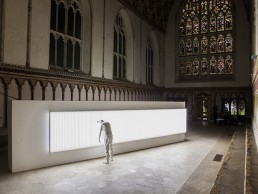
Sleepless Light Exercises, UK
Creating additional dramatic impact amidst Bernardi Roig's ‘Sleepless Light Exercises’ exhibition at this year's Canterbury Festival, Thorn Lighting has provided a powerful fluorescent illumination that offers a stark contrast to the installation's surrounding Gothic setting.
Thorn Lighting is helping to sponsor the Sleepless Light Exercises exhibition at The Canterbury Festival this year by supplying PopPack T26 Batten luminaires for use on a sculpture.
The annual event, which is taking place at the Chaper House in Canterbury Cathedral, is one of the most important cultural and contemporary art events to be held in the South East of England.
The exhibition by international artist Bernardi Roig, working with the University of Creative Arts (Canterbury), uses life size sculptures made from polyester resin leaning against a wall and covered in 200 of Thorn’s PopPack 58W Battens. The stark white of the sculpture, combined with the powerful illumination from the fluorescent lamps, creates a dramatic contrast within the surrounding Gothic stained glass window space.
Riog has been active in the international art scene for the past 25 years. His work has been recently shown in solo exhibitions at Sala Alcala 31 (Madrid), MUNTREF Centro de Arte Contemporáneo (Buenos Aires), The Phillips Collection (Washington), and Residenzgalerie Museum (Salzburg). His drawings, sculptures and installations are part of private and public collections in Spain, Italy, Cuba, Slovenia. Venezuela, Belgium and Japan.
Roig’s work explores themes such as human isolation, loneliness, the limits of knowledge and the body’s deterioration. The artist has created a tense relationship between figure and background, between rational comprehension and spiritual understanding, between artificial light and divine clarity.
Emma Braso, Cultural Programme Curator at University for the Creative Arts, commented: “We are delighted that Thorn has supported this event, the fluorescent lighting is a perfect choice of illumination for this exhibition as it creates a dramatic impact.”
Thorn’s PopPack Batten incorporates a Tridonic PC T8 Pro ballast contained in a white stoved enamel outer to provide a colour rendering index of 80 and luminaire efficacy of 90lm/w. The 1,500mm luminaire is suitable for a wide range of applications, including unique exhibition displays such as the Sleepless Light Exercises.
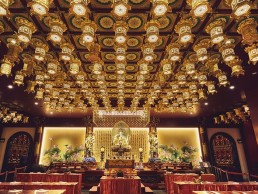
Buddha Tooth Relic Temple & Museum, Singapore
Enhancing the visitor experience for both tourists and worshippers, and to draw closer attention to the Buddha Tooth Relic Temple's intricate detailing, Aurecon's lighting scheme brings the Singapore landmark to life in a culturally-sensitive manner.
The Buddha Tooth Relic Temple & Museum is one of the most striking landmarks in Singapore’s Chinatown district, and a place where Buddhists attend a range of daily services. Opened in May 2007, and consecrated in 2008 as a Chinese Buddhist temple, the Tang-styled temple has particular importance to Buddhists as it is home to a religious relic - a Tooth of the Buddha. This artefact is the centrepiece of the building and sits in the Sacred Light Hall on the temple’s fourth storey.
Global engineering and infrastructure advisory firm Aurecon was appointed by the Buddha Tooth Relic Temple & Museum, to provide specialist lighting consultancy services for a significant upgrade of its lighting system. The work was carried out to better enhance the visitor experience for both tourists and worshippers, and to draw closer attention to the temple’s intricate design and detailing. This included a full overhaul of the temple’s interior and exterior lighting sources.
Aurecon’s Principal Lighting Designer, Angela Woo-Scott, thought the potential for creating a transformative lighting set-up was immediately apparent on arriving at the venue.
“It was clear to us on our first visit to the temple that we had to strike an important balance between maintaining the serenity expected of a place of worship while also creating a system that would best highlight the incredibly detailed design of the building along with its array of culturally-significant artefacts. Lighting can play an important role in defining how people will behave within a given space and this project was an opportunity to use that to maximum effect,” said Woo-Scott.
Aurecon proposed a new lighting system for all the public interior and exterior areas. In particular, emphasis was placed on improving the exterior lighting of the temple’s façade and landscape, as well as its lighting control systems, which were suffering functionality issues caused by wear and tear.
The Buddha Tooth Relic Temple is instantly recognisable in its neighbourhood, but much of its beauty lies in the detail, so the lack of adequate exterior lighting meant visitors and passers-by were not able to fully appreciate the intricacy of the building. For the team at Aurecon, this was one area of work where immediate improvement could be made.
The client’s initial request was to perform simple re-lamping or replacement of faulty exterior light bulbs. There were also no plans to change the halogen light sources that lit the temple’s interior. However, following a full site inspection, Aurecon discussed a proposed new lighting system, to be installed in both public interior and exterior areas (excluding the temple’s museum).
Rather than simply update what was in place, Aurecon was able to show the client how a new lighting system would improve the ambiance and overall experience for worshippers, visitors and staff. The aim was to enhance the immersive experience within these spaces to create better overall appreciation of the building. Aurecon supplied detailed plans, drawings and more to demonstrate how the new lighting system would improve the experience for those attending the temple.
Working in a culturally sensitive manner, Aurecon’s project team approached the execution phase with sensitivity, given that the facility would be operational during the upgrading work and out of respect for the religious landmark. In particular, the Chief Monk was initially unsure about upgrading the interior lights, having grown accustomed to the existing set-up within the building that is both his place of worship and his place of residence.
Constant dialogue with the temple’s facilities management team was equally important, so Aurecon ensured a consistent flow of information as the project team reviewed and assessed the management team’s diverse responses while they adapted to new controls and multiple light programming. By ensuring clear and frequent dialogue, adjustments could be more easily and accurately tailored to accommodate preferences and to improve the system further.
Taking into account that the temple was a finished structure, lighting replacement required extra careful handling to ensure no damage was caused to the building’s polished surfaces. Special attention was paid to work that needed to be done close to temple finishes, which could not be altered to match lighting fixtures.
Running new electrical cables in many areas proved impossible. In response, Aurecon’s project team showcased their creative versatility by developing bespoke, onsite solutions to adjust the output and beam angles from light fittings to suit each space.
Throughout the project, the Buddha Tooth Relic Temple remained fully operational from morning to night, and also on many nights when religious ceremonies were taking place – sometimes up to midnight. Work in the temple’s public spaces had to be conducted in the early hours, when the building was closed. Tasks such as light testing, commissioning and turning were also performed then. Rope access could be used at these times too, to facilitate façade lighting replacement work.
Commenting on the project’s success, Woo-Scott, added: “Visitors and worshippers at the Buddha Tooth Relic Temple & Museum now have a better experience overall and are able to enjoy the facility’s beauty in an environment that pays respect to the importance of the temple while still showcasing its wonder. Overall, the client was happy with the new lighting; many spaces in the temple are brighter and lighted correctly with the proper tuning and adjustment of light levels and aiming. The façade lighting has helped the temple display its magnificence at night as a significant landmark. Maintenance requirements have also been reduced; it is now easy to control lighting in all spaces.’’ Following a final site inspection with the Chief Monk, he expressed his enthusiasm for the new lighting systsem, as the temple’s fine and intricate details are now highlighted better than they have ever been before. Additionally, through the use of LED technology, the electricity consumption of the temple has also decreased, making it more energy efficient, offering an important contribution to the sustainable and responsible use of resources.
Pic: John Scott

Bob Bohannon
Lux Populi, the Mexico City based design practice that has been quietly building a name for itself across the world, is now expanding its reach with a new UK team headed by Bob Bohannon. First established by Thomas Paterson over a decade ago, the award-winning practice has now grown to a team of nineteen.
Can you tell us your background in the lighting industry?
I started my lighting career nearly 30 years ago, and was priviledged to undertake the MSc course at UCL alongside industry greats-to-be like Dominic Meyrick, Gary Campbell, Des O’Donovan and Jonathan Howard – there must have been something in the coffee that year. I was equally fortunate to spend two years with BDP, Barrie Wilde’s mentoring will always be valued and appreciated.
In 1997 I moved across to the manufacturing side of the industry at Sill. In the naughties we were dominant in the knowledge and application of optics and were leading the industry on the use of computer modeling. We provided a huge amount of support to the teams behind projects such as Heathrow T5 and Kings Cross Station.
The end of Sill was a hugely sad and painful experience, but I came away with lessons learnt on leadership and a great working knowledge of the type of major infrastructure projects such as rail or air terminals that extends Lux Populi’s skill set.
What’s your favourite experience in the industry so far?
That is easy - St Pancras Station. My involvement lasted 7 years, so much so that my then young son called it ‘Daddy’s railway station’. The key people who delivered it, Alistair Lansley and Peter Lawrence were a joy to work with. Ten years later it is still one of London’s most loved buildings.
What is the history of Lux Populi?
Thomas Paterson founded the practice in Mexico City ten years ago. That office has grown to seventeen, from backgrounds in architecture, engineering, interior design and indeed lighting. It’s a first principles practice focused on serving client needs with excellence, informed by architecture, joy, identity, behaviour, context and function.
What are Lux Populi’s major projects?
We’ve been working around the world in everything from high end residences to infrastructure. We’re passionate about every project, it’s hard to name one or two. We voted in the office - our favorites are Juvia (restaurant in Miami), Marc Chagall’s America Windows and The Lakeside Retreat, a home in upstate New York. Most recently we’ve won awards for Sushi Garage and Nos restaurants in Miami and Lima.
Thomas would tell you that his longest and most challenging project was a 48,000 square foot home for a client of Tadao Ando’s, but that his greatest joy was the Art Institute of Chicago.
I’m hugely impressed with a new project, still under wraps, that defines the entrance to a global city with fun but timeless, technically smart interventions. It’s a multi-billion-dollar infrastructure project. It’s discipline of understanding everything from brand and aesthetics through to delivery, engineering and lifecycle operations is something that drew me in to Lux Populi.
Why was it decided to set up Lux Populi in the UK?
Our existing team already works on projects in the Americas, Europe the Middle East, Africa, India and Australasia. Working at great distances is part of our DNA - demanding great communication a rigor in documentation, but with the UK office we’re happy to reduce travel distances and time zone differences. There are a lot of highly skilled designers in the UK, but few practices really make the right platform for them to learn, develop, teach and create.
It also gives us a real base to be trans-atlantic, working into the States and Latin America has been tough for European design practices, few have a strong flow across the Atlantic. Having teams on both sides who live the design and construction cultures of each side, we’re going to be brilliantly positioned to support European architects working in the Americas, and visa versa.
What do you feel you can bring to the UK venture?
I bring new areas of experience (large infra/public domain), especially on major rail and air termini that add to the practice’s huge strengths in residential, retail, leisure and identity.
Part of my brief is to be a technical guru to the team and to ensure best practice on environmental and social responsibility. I already ‘give back’ to the industry by way of being on the Vice Presidential team at the Society of Light and Lighting, but I will also focus on ensuring our schemes use the least embodied, life cycle and in-use energy possible.
Who else is part of the UK team?
The team will be led by myself, with Thomas Paterson making regular trips over. The other key person will be Oriana Romero who has been a senior member of the Mexico City team for several years. As well as her lighting design skills she will be ensuring that the unique and incredibly positive Lux Populi Mexico City psyche will be brought to the UK. She has led projects from the Costanera Center in Santiago de Chile through to historic refurbishments in Mexico City and private homes around the world. We are actively recruiting and we are excited that so many talented people are reaching out to us.
How do you see lighting design developing in the future?
I think the industry is heading down some blind alleys or prematurely jumping into new trends without enough solid research. For us, the fundamentals of lit environments remain key, the craft of light, of user functions, of identity, of social activation, and of social responsibility. We could talk IoT or Human Centric Lighting, both of which are part of the future, but neither changes the ‘why’ our clients hire us, nor the focus on going back to first principles on EVERY project. How can we benefit our clients? How can we actively create something positive for all the stakeholders?
Schmitz joins Nordeon Group
(Netherlands) - Arnsberg-based indoor lighting specialist Schmitz joins Nordeon Group to accelerate product development and commercial efforts.
The Nordeon Group has announced that as of 1 December Schmitz Leuchten from Arnsberg, has joined its ranks.
Schmitz is well known for its premium design, high performance luminaires for office, hospitality, architectural and retail. Founded in 1932 it has a rich history and legacy in providing technological design and custom lighting solutions to its customers.
By joining, Schmitz will be able to tap into Nordeon Group’s technological capabilities, its global commercial and support infrastructure, its strong industrial base and benefit from being part of its portfolio of brands.
With its brands Hess, Wila, Griven, Nordeon, Vulkan and now also Schmitz, the Nordeon Group can cater to its customers’ every need. The combined knowledge in applications, technology, design, specification and customisation make Nordeon Group a full service partner for lighting professionals across the globe.
Founded in 2012, the Nordeon Group is one of the world’s leading and professional lighting companies for indoor and outdoor lighting. With production, development and support facilities close to its key markets, Nordeon Group companies are the reliable local partner with a global footprint.
‘‘The Nordeon Group is proud to welcome Schmitz. This is an important step in strengthening the Nordeon Group with a highly recognised premium professional lighting brand, with an impressive product portfolio and very comprehensive customisation, design and development capabilities. The Nordeon Group will enable Schmitz to further accelerate its product development and commercial efforts by tapping into our global design, technology and support infrastructure,’’ said Patrick van Rossum, Chairman of the Nordeon Group.
Christoph Schmitz, CEO of Schmitz added: ‘‘Being part of the Nordeon Group will help us to be in a stronger position to grow Schmitz and accelerate innovation in a market that is demanding faster technology developments and experiencing increasing complexity. We can immediately benefit from Nordeon Group’s international footprint and rapidly expand in key markets such as UK, Middle East and the US.’’
“With our comprehensive portfolio of brands – Hess and Vulkan for outdoor, Griven for architectural lighting, Nordeon, WILA, and now also Schmitz for indoor lighting – we are geared towards every thinkable lighting application area and requirement. The Nordeon Group is a reliable and flexible partner for our customers and partners in the different markets, globally,’’ said Nordeon Group CEO Pierre van Lamsweerde.
Schmitz and his management team will continue to run and operate the Schmitz business from Arnsberg in Germany.
www.nordeon-group.com
www.schmitz-leuchten.de

Available Light expands Boston studio team
(USA) - University of Texas graduate Po-Yang Sung brings theatrical lighting experience to Boston studio team.
Available Light has announced the expansion of its Boston studio with the hiring of Po-Yang Sung.
Sung is a Taiwanese native fresh from The University of Texas at Austin, where he received his MFA in Lighting Design. In school, he lit a variety of performance styles ranging from drama to dance to musical comedy. Prior to joining Available Light, Sung served as Resident Lighting Designer at Michigan’s Thunder Bay Theatre Company. His thoughtful approach encompasses inspiration from the diversity of both nature and culture; in fact, his graduate thesis - lighting design for an international airport terminal ‘Wing It’ - developed from his desire to apply his theatrical background aesthetic and his curiosity about the world to the design of an iconic architectural space.
“The addition of Po-Yang supports our practice of infusing theatrical lighting techniques within architecture, museum exhibition, and tradeshow environments. We are excited to have him in our field and in our studio and we look forward to what Po-Yang has to teach us,” said Steven Rosen, FIALD, President and Creative Director of Available Light.

Crompton partners with Gooee
(India) - Terms of agreement outline Crompton as Gooee launch partner in India.
Crompton Greaves Consumer Electricals (CGCEL), India-based supplier of consumer electrical goods, lighting and lighting automation systems, has teamed up with Gooee, the UK based creator of a full-stack operating platform connecting lighting manufacturers and their customers to the IoT.
Under the terms of the agreement, Crompton will become Gooee’s launch partner in India and will be able to use Gooee’s new lighting ecosystem to provide additional functionality and value to customer lighting and IoT solutions.
With this partnership, Crompton unleashes its plan to foray into the world of IoT and connected lighting in big way. All the Gooee features and scalability combined with Crompton’s design and execution capability will bring products and solutions to its customers with exciting features.
The Gooee ecosystem provides sensing, control and communication components that integrate with an enterprise scale cloud platform. This offers a service-driven, scalable framework that can be integrated into LED lighting installations, significantly increasing control, monitoring and data analysis while driving performance and efficiency improvements.
The Crompton Brand in India was established over eight decades ago and has been successful, thanks to bringing meticulously engineered products to both consumer and B2B markets.
Being able to move in to connected lighting enables Crompton to maintain and grow its strong presences in the Indian lighting market.
Shantanu Khosla, Managing Director, Crompton Greaves Consumer Electricals Ltd., said: “I am delighted to announce our partnership with Gooee. The Gooee system puts lighting at the heart of a building’s IoT, providing new opportunities to monitor LED performance, track footfall and communicate directly with occupants.
“We believe these factors will be of significant interest to many of our customers, in particular those in the retail, commercial property and industrial sectors, enabling them to operate more efficiently and effectively within our increasingly connected world.”
Jan Kemeling, Chief Commercial Officer of Gooee Limited, commented: “We are very pleased having entered into this partnership agreement with Crompton. India is a very important fast growing market and it is an honour for us to engage with a forward thinking market leader with a clear focus on innovation. The company employs highly capable engineering resources who understand that apart from energy savings, the Gooee platform will offer Crompton’s professional customers endless possibilities to improve and optimise their business processes.
“The integration of Crompton’s digital lighting products in to Gooee’s enterprise cloud, which has been designed to manage the high-velocity/high-volume transaction data from the on-premise environment and provide an extensible platform to develop applications and data visualisations, will lead to innovative service offerings from Crompton to its customers in any vertical.”
www.crompton.co.in
www.gooee.com
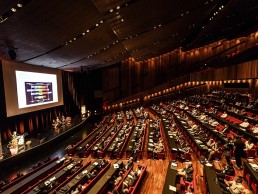
LpS 2017 Call for Papers begins
(Austria) - Industry and academic experts invited to submit abstracts by 3 February 2017.
The LED professional Symposium +Expo (LpS) is an annual European lighting conference focusing on technologies, innovations and applications. The LpS 2017 will emphasise “Smart Technologies for Lighting Innovations” and cover the latest trends in application areas.
Experts from academia and industry are invited to submit an abstract and present their newest research, developments, innovations and expectations for future trends to a highly qualified audience. Between the 26 and 28 of September 2017, expert speakers, attendees and exhibitors from more than 50 countries will exchange their technological know-how at the Festspielhaus in Bregenz, Austria.
Eight Benefits of Being an LpS Speaker
- You have the chance to win the LED professional Scientific Award.
- Your paper will be published in the LpS 2017 proceedings booklet.
- You will receive a three-day Symposium Pass, a proceedings booklet and access to all lectures.
- You will receive a ticket to the Get-Together event on Lake Constance.
- You will have the chance to exchange information with international lighting experts.
- You can expand your knowledge on current and future trends and developments.
- You can visit over 100 leading businesses showing their products, equipment and services.
- You can make new contacts and participate in numerous networking opportunities.
Application Areas for the Abstract
The theme of the abstracts can be taken from the following application areas: Human Centric Lighting, Indoor Lighting, Outdoor Lighting, Automotive Lighting, Transportation Lighting, Architectural Lighting, Signage Lighting, Stage Lighting, Museum Lighting, Horticultural Lighting and Medical Lighting.
The presentation topics can range from information about Lighting Systems, Light Sources, Optics, Electronics, Drivers, Thermal Management, Measurement, Testing, Security, Reliability, Smart Controls, Smart Sensing, Intelligent Lighting, Networks, Cloud Systems, IT Systems, Software, Apps, Standardizations, Lighting Design, Cost, Manufacturing and Equipment.
Requirements and Website
The submitted papers must be original material and not have been previously presented or published and should cover latest technologies, innovations or market insights. The selected papers will be presented in English in a 25-minute time slot at the LpS 2017 conference.
You can submit your abstract at: www.LpS2017.com/call-for-papers
Schedule
- Feb 3, 2017: Call for Papers Deadline
- April 3, 2017: Notification of Acceptance
- June 2, 2017: Submission of Full Paper
- Sept 11, 2017: Submission of Final Presentation
- Sept 26-28, 2017: Lecture at the LpS 2017 Event
For more information about the event see this year’s LpS Event video https://youtu.be/phE43GJZc-8
www.led-professional-symposium.com
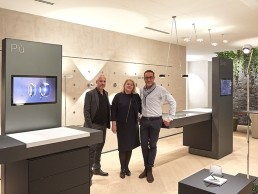
Occhio opens Cologne flagship store
(Germany) - New 330m² multifunctional space combines showroom and information platform in lighting and brand experience over two floors.
On 10 November 2016 Occhio, the Munich lighting and design company, opened its new flagship store at Kaiser-Wilhelm-Ring in Cologne. The multifunctional store concept, planned and implemented together with the architecture office eins:33, offers consultation and sales and unites a showroom and information platform in a lighting and brand experience.
For almost eighteen months, Occhio together with eins:33 worked at planning and implementing the new site at the heart of the Rhine metropolis. More than 200 guests celebrated the opening with the Occhio team and experienced an mix of architecture, lighting design and products. On more than 330m² and over two floors, the new Occhio store CGN presents a interactive brand and experience world, providing a showroom and information platform for final customers, professionals and retail partners alike.
The flagship store is divided into three areas. On the ground floor the visitor is welcomed in a bright showroom. ‘Space stations’ are used to present diverse luminaire and spotlight series and invite visitors to get to know the products interactively. The eye-catching green stone plant wall symbolises Occhio's philosophy and rounds off the room's design concept.
At the rear of the store there is a large multifunctional area for training courses, lectures and special exhibitions.
A living area awaits the customer on the upper floor. In a cosy atmosphere, the visitor experiences Occhio luminaire and spotlight systems in realistic application and the effect of light and quality of light as if at home.
The Occhio Store Cologne is one of the two company-own flagship stores (Cologne and Munich) and the pilot for the new ‘store by’ concept, which is being implemented throughout Europe with a selective circle of retail partners. Occhio stores have already been successfully opened and established with exclusive retail partners in Paris, Luxembourg, Prague and Antwerp.
‘‘Our endeavour is to develop innovative and unique product families for holistic lighting design,’’ said Axel Meise, Designer and Proprietor of Occhio. ‘‘I will be delighted if we are able to communicate the added value of good light to visitors to the new Occhio store in Cologne. With our products we would like to enable people to interact naturally with light thus becoming the lighting designers of their own living environment. For quality of light means quality of life.’’

Architainment Lighting appoints new Key Account Manager
(UK) - Gitte Kondrup brings more than 20 years Specification Sales experience to High Wycombe offices.
Architainment has announced that Gitte Kondrup has joined the team as a Key Account Manager.
Kondrup has more than 20 years experience in Specification Sales in the UK interiors industry, originally in commercial furniture and more recently in architectural lighting.
She has extensive experience of working with lighting designers, architects and interior designers, and assisting them in achieving their project visions.
Prior to joining Architainment, Kondrup worked for WILA Lighting, Alliance Lighting and Whitegoods.
Neil Gamble, Sales Director commented: ‘‘We’re delighted that Gitte has joined the team. Architainment continues to grow, and Gitte will be instrumental in developing and supporting our client base.”
Kondrup will be based at Architainment's High Wycombe offices, and can be contacted on gitte.kondrup@architainment.co.uk or 07899 951 824
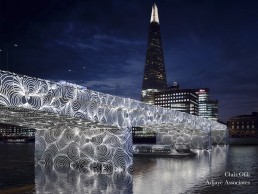
Illuminated River competition under scrutiny
(UK) - London bridges illumination plan receives criticism from lighting design community.
The six shortlisted lighting schemes of the Illuminated River design competition - which plans to use the winning scheme to illuminate London's river bridges - have received negative feedback from some members of the lighting design community.
The international design competition is run by The Illuminated River Foundation and the Mayor of London. Each team has created a concept design for lighting four individual bridges (Chelsea, London, Waterloo and Westminster) and an overarching masterplan for the main road, rail and pedestrian bridges between Albert and Tower.
Initially, the jury - who are to pick the winner in December - was void of any lighting design professionals (aside from Artist James Turrell), which was expressed as a cause for concern by lighting specialists.
Subsequently, in response to the criticism, the organisers of the contest have announced that a supporting panel has been set up to assist the jury. Representing lighting designers, the supporting panel will feature Mark Major, principal at Speirs + Major.
The plans were submitted by notable design teams from around the world, including Adjaye Associates, Arup, Diller Scofidio + Renfro, light artist Leo Villareal, Sam Jacob Studio and Les Eclairagistes Associates.
Members of the public will be able to view the designs at the Royal Festival Hall in London for the next month to form their own opinions and a winner will be announced on 8 December.
